
- 0
- 884 words
Introduction: When Machines Create, Who Verifies?
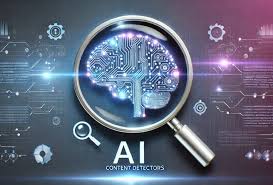
The digital world has entered a new chapter. Artificial intelligence can now draft articles, compose emails, generate reports, and even simulate human-like conversations. While this innovation boosts productivity, it also raises a critical question: how do we distinguish between human creativity and machine-generated content?
This is where the ai detector steps in — not as a restriction tool, but as a digital authenticity guardian.
An ai 검사기 is more than a content scanner. It is a technological checkpoint designed to maintain transparency, credibility, and accountability in a rapidly automated world.
What Is an AI Detector?
An ai 검사기 is a specialized system built to analyze written content and assess whether it was generated by artificial intelligence models. Unlike plagiarism checkers that compare text against existing databases, an AI detector evaluates linguistic patterns, probability distributions, and structural consistency.
It does not search for copied content.
It searches for machine fingerprints.
By analyzing sentence rhythm, predictability scores, and word selection probability, AI detectors estimate the likelihood that a piece of text was created by an AI model rather than a human writer.
Why AI Detectors Are Becoming Essential
1. The Education Shift
Students now have access to advanced AI tools capable of producing essays within seconds. Schools and universities face a new academic reality. An AI detector helps institutions encourage ethical AI use while maintaining evaluation standards.
It is not about banning technology — it is about preserving learning integrity.
2. Media and Journalism
In a world already battling misinformation, credibility is everything. Newsrooms and publishers use AI detectors to ensure that editorial content aligns with authenticity policies. Trust is fragile; verification strengthens it.
3. Corporate Communication
Businesses rely on transparency. From compliance reports to marketing copy, companies must ensure their content reflects human oversight and responsibility. AI detectors provide that verification layer.
How an AI Detector Works Behind the Algorithm
At its core, an AI detector uses machine learning models trained on massive datasets of both human-written and AI-generated text.
It evaluates:
- Perplexity levels (how predictable the text is)
- Burstiness (variation in sentence complexity)
- Token probability patterns
- Structural uniformity
Human writing tends to contain emotional irregularities, stylistic variations, and natural inconsistencies. AI-generated content often shows smoother probability curves and more statistically balanced phrasing.
The detector compares these signals and assigns a probability score rather than a simple “yes” or “no.”
AI Detector vs. Plagiarism Checker: Understanding the Difference
Many people confuse the two. However, their purpose is entirely different.
| Plagiarism Checker | ai 검사기 |
| Detects copied content | Detects machine-generated patterns |
| Compares against databases | Analyzes statistical structure |
| Focuses on duplication | Focuses on origin |
| Database-driven | Model-driven |
An AI detector does not care if text is unique — it cares how it was generated.
The Ethical Debate Around AI Detection
As AI detectors gain popularity, ethical discussions follow.
Some argue that detection tools may:
- Produce false positives
- Misinterpret highly polished human writing
- Raise privacy concerns
However, others believe AI detectors promote transparency and responsible technology adoption.
The key lies in balance. Detection should be used as a guidance tool, not a punitive mechanism.
Industries That Rely on ai 검사기
Academic Institutions
To maintain fair evaluation systems.
Publishing Platforms
To ensure credibility and maintain brand authority.
Legal Firms
To verify documentation authenticity.
Recruitment Agencies
To evaluate candidate submissions genuinely.
Government Bodies
To prevent automated misinformation campaigns.
As AI-generated content grows, AI detectors become foundational infrastructure rather than optional tools.
The Limitations of AI Detectors
No system is perfect. AI detectors face ongoing challenges:
- AI models continuously evolve.
- Advanced prompts can mimic human irregularity.
- Hybrid content (AI-assisted but human-edited) blurs detection boundaries.
This constant technological race means ai 검사기 must update frequently to remain effective.
The future of detection will depend on adaptive learning models that evolve alongside generative AI systems.
The Future of ai 검사기 Technology
ai 검사기 will likely expand beyond text.
Emerging developments include:
Image and Video Detection
Identifying AI-generated visuals and deepfakes.
Behavioral Analysis
Studying writing behavior patterns rather than just the final output.
Blockchain Authentication
Embedding digital signatures into original human-created content.
Transparency Certification
Websites may adopt AI authenticity badges powered by verification tools.
As automation scales, detection becomes a pillar of digital trust.
Why AI Detectors Are Not Anti-Innovation
There is a misconception that AI detectors exist to suppress artificial intelligence. In reality, they enable responsible integration.
AI is a powerful productivity tool.
Detection ensures it is used ethically and transparently.
The goal is not restriction — it is clarity.
When readers know whether content is AI-assisted or human-written, trust increases. Transparency strengthens ecosystems.
Strategic Implementation of an AI Detector
For organizations considering adoption, strategy matters.
- Define internal AI usage policies.
- Combine AI detection with human editorial review.
- Educate teams about responsible AI integration.
- Use detection results as indicators, not absolute judgments.
This balanced approach protects innovation while preserving credibility.
Conclusion: ai 검사기 as the Guardian of Digital Authenticity
The rise of artificial intelligence has transformed content creation at an unprecedented scale. As machines become more capable, the need for authenticity grows stronger.
An ai 검사기 is not merely a technical tool — it is a trust mechanism for the modern digital era.
From classrooms to corporations, from media platforms to regulatory institutions, AI detection technology plays a crucial role in maintaining integrity. As generative ai 검사기 continues to evolve, AI detectors will become an essential safeguard in preserving transparency and accountability.
For the Information: Click Here
Author

admin@winpazes.com
Related Posts
How Generative AI Chatbots Work: Architecture, Use Cases, and Future Trends
- 0
- 986 words
Generative AI chatbots are rapidly redefining how machines interact with humans—moving from rigid scripted bots to intelligent conversation partners capable of understanding...
Read out all
Secure Access Management Systems Dubai to Stop Breaches
- 0
- 961 words
Data breaches are rising across the UAE. Businesses in Dubai face daily cyber and physical security threats. Many companies still rely on...

Corteiz | Corteiz Tracksuit Official Store
- 0
- 1,077 word
Welcome to the sector of Corteiz, wherein fashion meets consolation in a unbroken combination that defines cutting-edge style. The Corteiz Tracksuit Official...
Read out all
Building Trust and Understanding with Your AI Companion
- 0
- 1,031 word
Why Trust Is the First Step in a Digital Bond Initially, when I start talking to an AI companion, everything feels new....
Read out allComplete Guide to Payroll Software Bangalore for Business
- 0
- 774 words
Bangalore, known as India’s Silicon Valley, is home to thousands of startups, IT firms, manufacturing units, and service-based companies. With rapid business...

Real-World Example of Finding Phone Number Information for Lead Generation
- 0
- 1,280 word
I was sitting in my office last week feeling pretty frustrated because my lead list was basically a graveyard of dead ends....
Read out all